
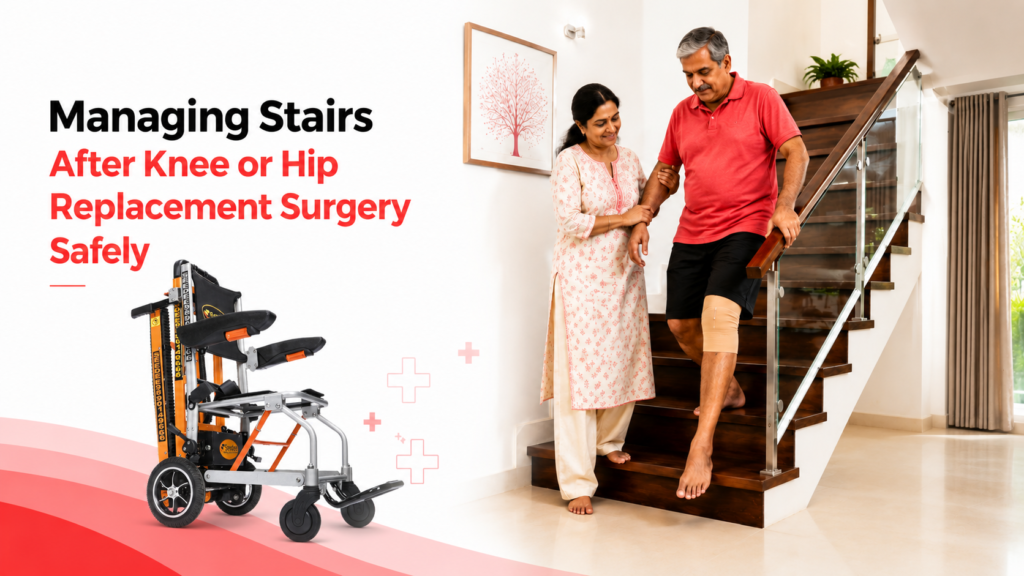
A knee or hip replacement can make everyday movement easier in the long run. But during the first few weeks of recovery, simple activities such as using the stairs need a little more care. For most people, stairs are the first real test of the new joint, and it is completely normal to feel unsure about them.
The good news is that stairs are not off-limits. Your body just needs a plan, a little patience and the right support around it.
Give your body time, not just willpower
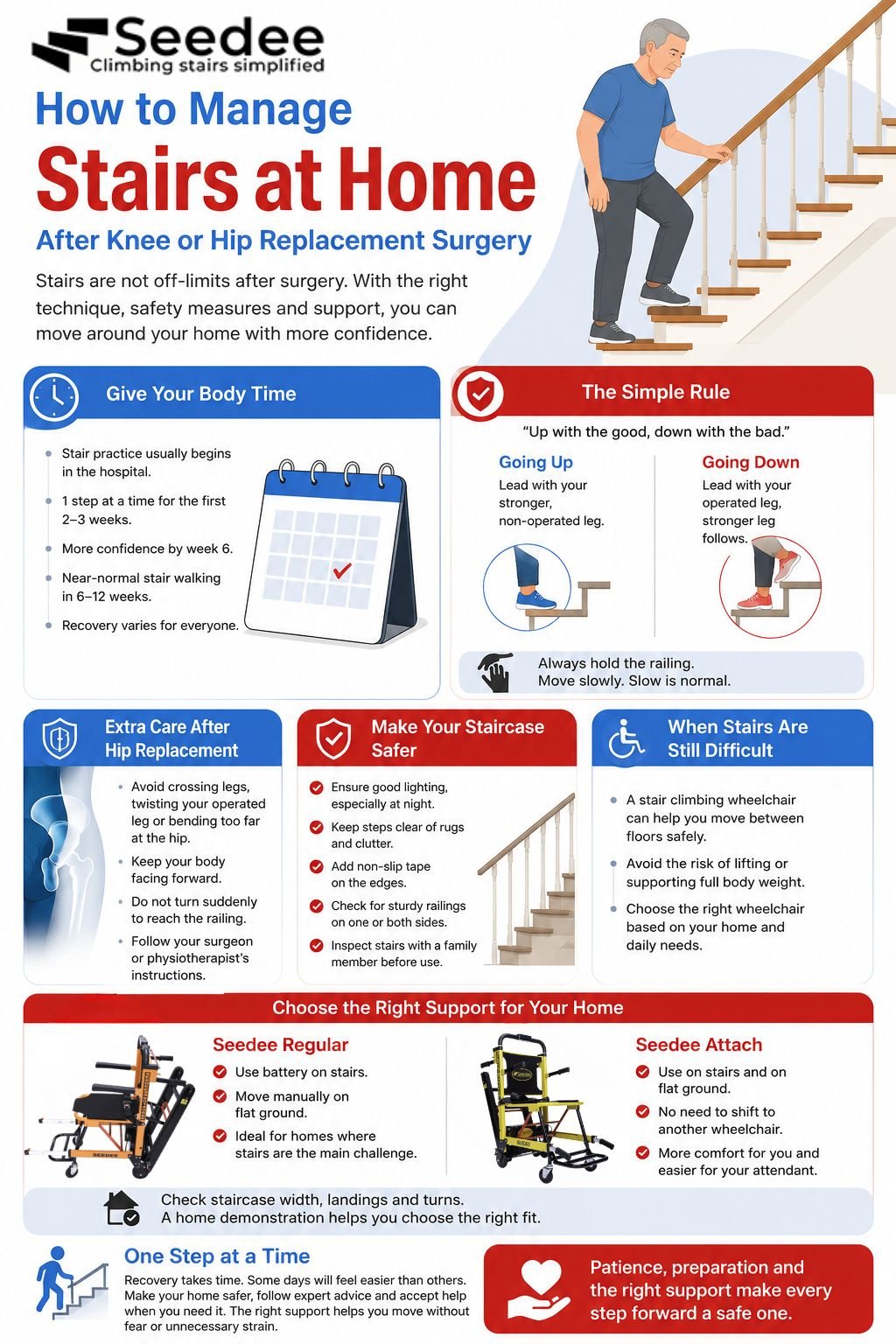
Doctors usually start stair practice within the first few days after surgery, right there in the hospital, with a physiotherapist by your side. From there, most people move in stages: careful, one-step-at-a-time movement for the first two to three weeks, more confidence by week six and a near-normal walk on stairs somewhere between six and twelve weeks.
Recovery varies from person to person, and that is fine.
The simple rule physiotherapists teach
You will hear this phrase a lot: “Up with the good, down with the bad.”
When going up, lead with your stronger, non-operated leg. When coming down, lead with your operated leg, with the stronger leg following.
It sounds like a small detail, but it prevents your new joint from taking sudden weight. With practice, the movement gradually starts to feel more natural.
Always keep a hand on the railing, and do not rush. Slow is normal right now, not a setback.
A little extra care after hip replacement
If you have had a hip replacement, your doctor may ask you to avoid certain movements during the early weeks of recovery. These can include crossing your legs, twisting your operated leg, or bending too far at the hip. The precautions may differ depending on the type of surgery you have had.
When using stairs, keep your body facing forward and avoid turning suddenly to reach the railing. Take each step slowly and place your foot properly before moving to the next one. Most importantly, follow the instructions given by your surgeon or physiotherapist, even if they are different from general advice you may have heard.



A little extra care after hip replacement
Before you attempt the first step, look at the stairs the way a therapist would:
Is the staircase well-lit, especially in the evening?
Are the edges of every step visible and free from loose rugs or clutter?
Would a strip of non-slip tape help along the edges?
Is there a sturdy railing on at least one side, or ideally both?
These small changes cost very little but can make a real difference to both safety and confidence.
It also helps to inspect the staircase with a family member before you start using it daily. You may notice something that is easy to miss when you are concentrating on your steps, such as one step being slightly higher than the others or a railing that wobbles near the top.
Most homes need only minor fixes, but it is better to find and address these issues early rather than discovering them halfway up the stairs.
When climbing the stairs is still difficult
Making the staircase safer may be enough for some people. But in homes with many floors, stairs may still need to be used before the person feels strong or steady enough to climb them.
During this stage, a stair climbing wheelchair can make movement between floors easier for both the person recovering and the family member helping them. It avoids the unsafe practice of physically lifting or supporting someone’s full weight on the stairs.
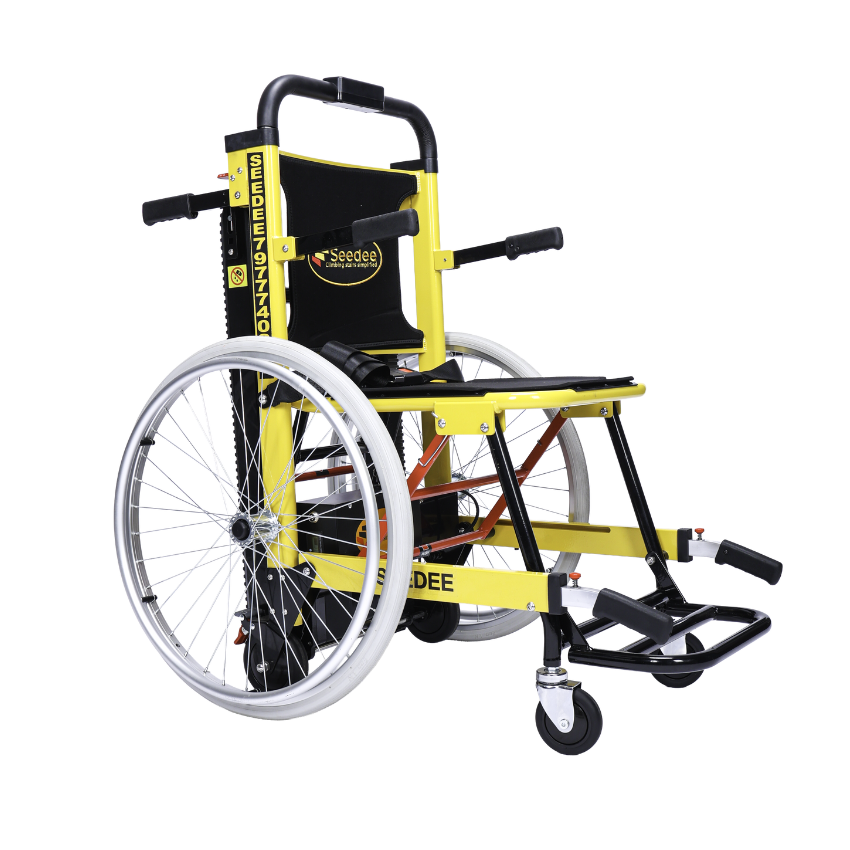
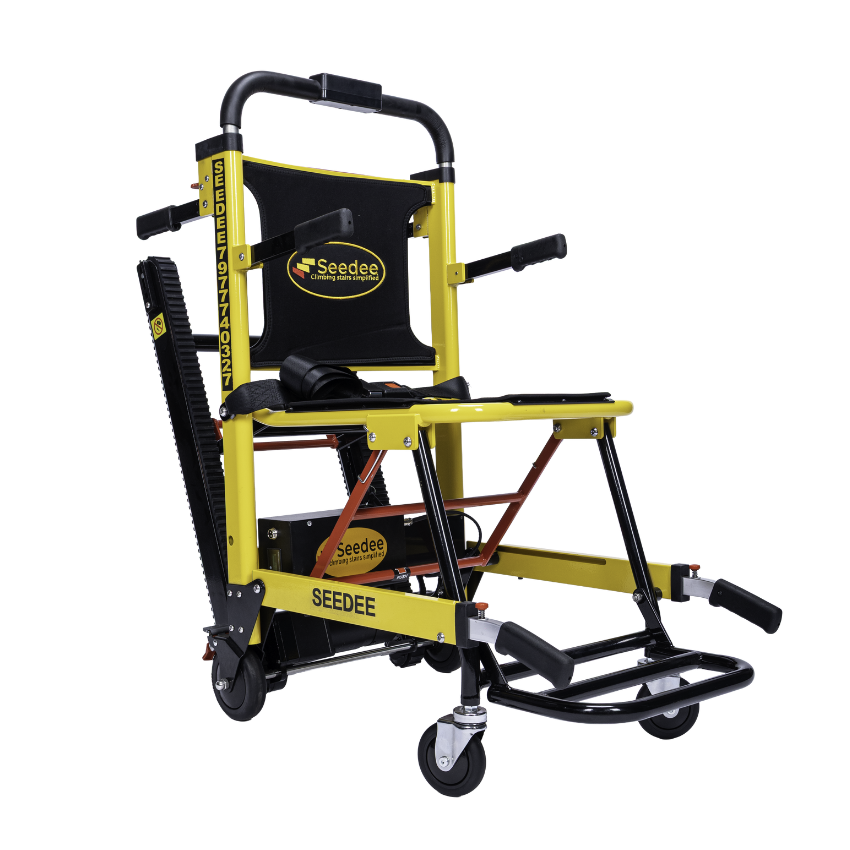
The right wheelchair will depend on how it will be used at home. Some families may need support only for moving between floors. In that case, the Seedee Regular can be operated using its battery on stairs and moved manually once it reaches flat ground.
In other homes, the person may need the wheelchair throughout the day for moving between rooms as well as going up or down the stairs. The Seedee Attach can be used for both, so there is no need to shift the person from one wheelchair to another every time they reach the staircase. This can make everyday movement more comfortable for the person recovering and easier for the family member assisting them.
Before choosing one, it is important to check the width and shape of the staircase, the landings and the number of turns. If your home has limited space, it’s worth learning how to choose a stair climbing wheelchair for narrow stairs to ensure safe operation. A home demonstration can help the family understand whether the wheelchair is suitable and how the attendant should operate it safely.
Taking recovery one step at a time
Recovery after a knee or hip replacement continues long after you return home. Along with physiotherapy and safe mobility, getting enough rest is equally important, so these tips for improving sleep quality during recovery may also help support healing. Some days will feel easier than others, and even a familiar staircase may take time to feel normal again.
There is no need to prove anything by climbing before you are ready. Follow your physiotherapist’s advice, make small safety changes around the home and accept help when you need it. Whether that support comes from a family member, a walking aid or a stair climbing wheelchair, its purpose is simply to help you move without fear or unnecessary strain.