
When families start looking for a wheelchair, they often expect the choice to be fairly simple. Then they come across several options, which become confusing.
The important thing to remember is that there is no single “best wheelchair” for everyone. A person who needs help only during long outings may need something very different from someone who uses a wheelchair every day. The person’s comfort, the places they visit and even the layout of their home can all affect the choice.
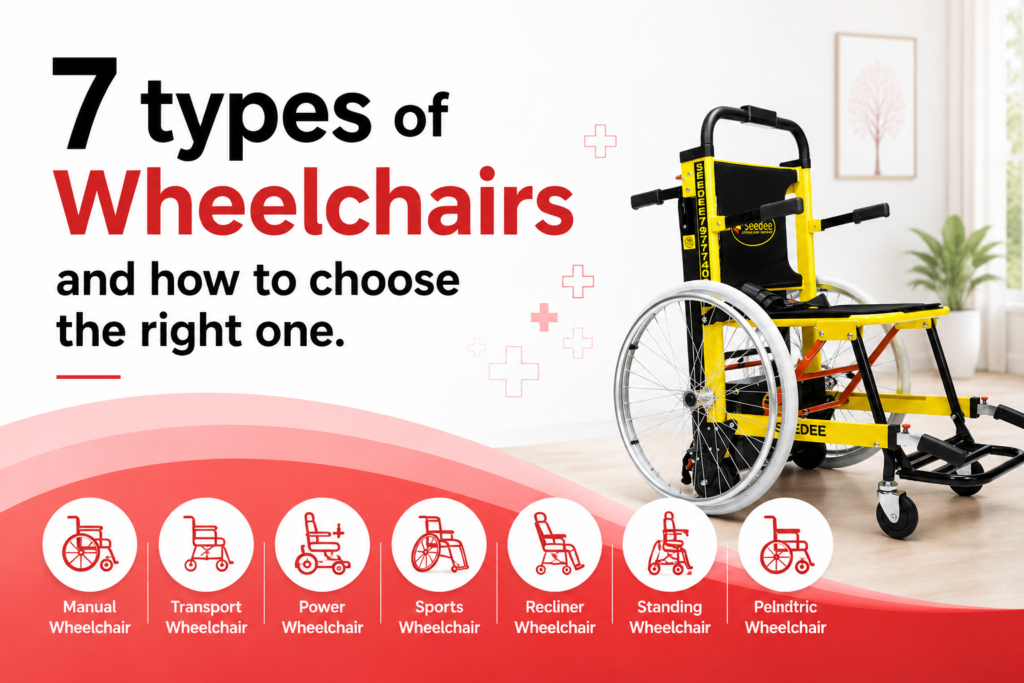
Here are 7 common types of wheelchairs and where each one may be useful.
1. Manual wheelchairs
Manual wheelchairs are among the most commonly used wheelchairs. They can be moved by the person sitting in the chair using the large rear wheels or pushed by a family member or attendant.
They are generally suitable for:
- Moving around at home
- Hospital visits
- Short outdoor trips
- People who have enough arm strength to move the wheelchair
- People who usually have someone available to assist them
Manual wheelchairs do not need charging and are usually easier to maintain than electric models. Many can also be folded and placed in a car.
However, using one for longer distances can be tiring. Uneven roads, slopes and narrow spaces may also make it harder to move.
2. Transport and lightweight wheelchairs
Transport wheelchairs are generally used for short trips and are pushed by a family member or attendant. Most have small wheels and can be folded, making them convenient for hospital visits, travel and occasional outings.
They may work well for someone who:
- Needs a wheelchair only occasionally
- Usually has someone available to push the chair
- Frequently travels by car
- Has limited storage space at home
Some regular manual wheelchairs are also available in lightweight and foldable designs. Unlike a transport chair, these may have larger rear wheels that allow the person sitting in the chair to move it using the hand rims.
Before choosing one, check its weight, folded size, seat comfort and weight limit. A wheelchair may be easy to lift into a car, but it should still feel comfortable and steady when being used.
3. Electric wheelchairs
Electric wheelchairs run on a rechargeable battery and are generally operated using a joystick or another simple control.
They can be helpful for people who find it difficult or tiring to move a manual wheelchair with their arms. They are also useful for covering longer distances, depending on the model and the surroundings.
An electric wheelchair may suit someone who:
- Uses a wheelchair for much of the day
- Wants to move around without being pushed
- Has limited strength in their arms or upper body
- Regularly travels longer distances within a home, campus or residential complex
Electric wheelchairs are usually heavier than manual ones. They also need regular charging and may require more planning when travelling by car.
Before choosing one, check whether it can comfortably pass through the doors and passages at home. It is also worth considering where the wheelchair will be stored and charged.



4. Reclining wheelchairs
Sitting upright for long hours is not comfortable or suitable for everyone. A reclining wheelchair allows the backrest to move backwards so that the person can change position during the day.
It may be useful for someone who:
- Needs more support for the head, neck or back
- Finds it difficult to sit upright for long periods
- Needs help changing their sitting position
- Spends several hours each day in the wheelchair
Some models also have adjustable leg rests, head support and extra cushioning.
Reclining wheelchairs can be heavier and need more room than standard models. Families should check whether the chair can move easily through the home and whether an attendant can adjust it safely.
The person’s doctor or physiotherapist may also suggest the kind of back, neck and seating support needed.
5. Standing wheelchairs
Making the staircase safer may be enough for some people. But in homes with many floors, sta
Standing wheelchairs allow the person to move from a sitting position into a supported standing position.
For some users, this can make it easier to reach shelves, speak to someone at eye level or complete certain everyday tasks. However, these wheelchairs are not suitable for everyone.
A standing wheelchair should be selected with advice from a qualified healthcare professional who understands the person’s health, strength and support needs. Proper fitting and training are also important.
irs may still need to be used before the person feels strong or steady enough to climb them.
During this stage, a stair climbing wheelchair can make movement between floors easier for both the person recovering and the family member helping them. It avoids the unsafe practice of physically lifting or supporting someone’s full weight on the stairs.
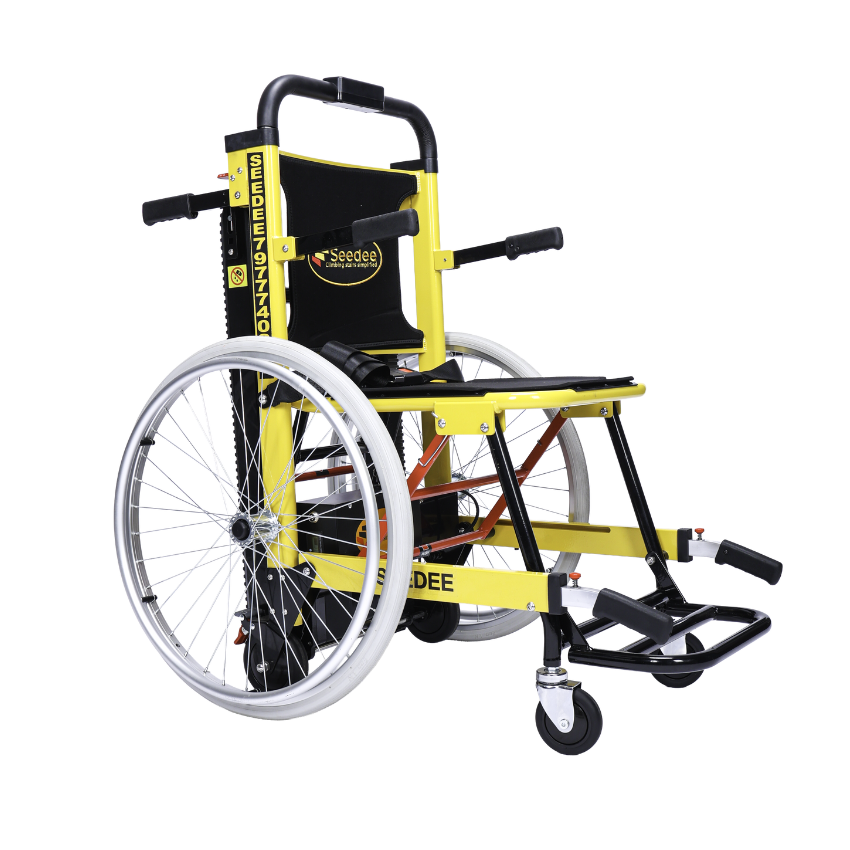
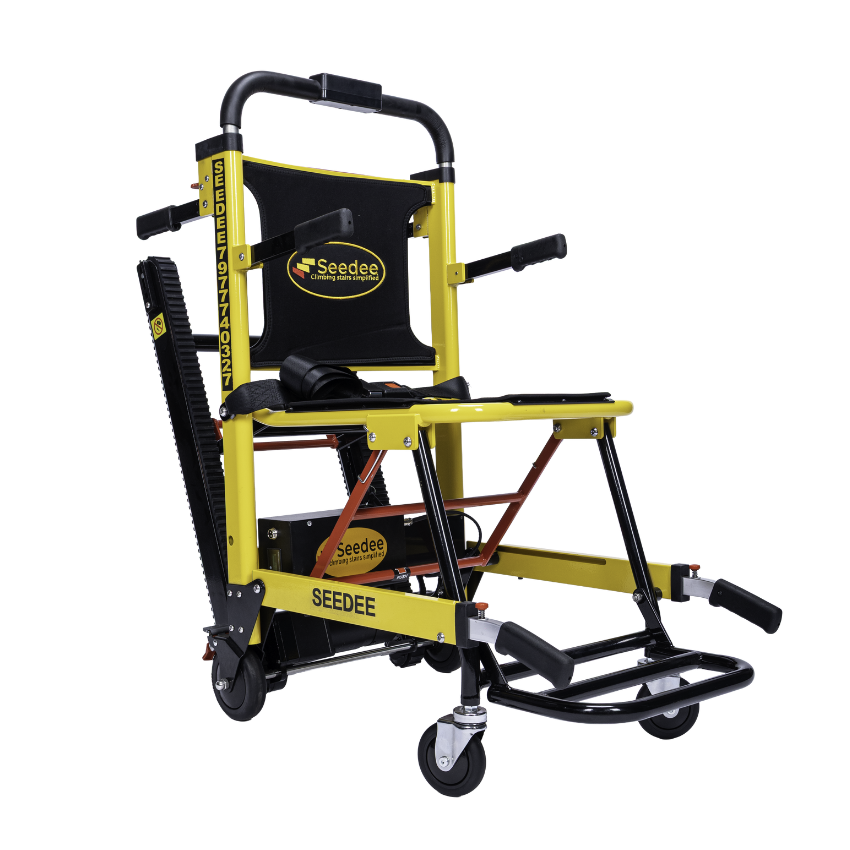
The right wheelchair will depend on how it will be used at home. Some families may need support only for moving between floors. In that case, the Seedee Regular can be operated using its battery on stairs and moved manually once it reaches flat ground.
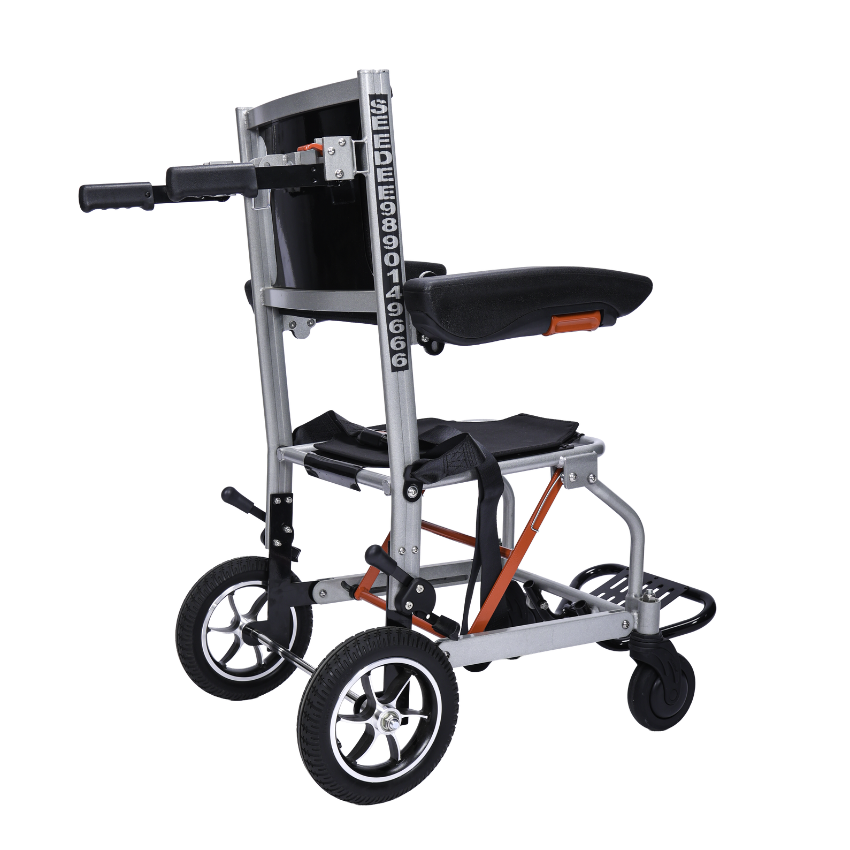
In other homes, the person may need the wheelchair throughout the day for moving between rooms as well as going up or down the stairs. The Seedee Attach can be used for both, so there is no need to shift the person from one wheelchair to another every time they reach the staircase. This can make everyday movement more comfortable for the person recovering and easier for the family member assisting them.
Before choosing one, it is important to check the width and shape of the staircase, the landings and the number of turns. If your home has limited space, it’s worth learning how to choose a stair climbing wheelchair for narrow stairs to ensure safe operation. A home demonstration can help the family understand whether the wheelchair is suitable and how the attendant should operate it safely.
6. Sports wheelchairs
Sports wheelchairs are made for activities such as wheelchair basketball, racing, tennis and badminton.
They look and move differently from everyday wheelchairs. Depending on the sport, they may have angled wheels, a lower seat or a frame designed for quick turns.
These wheelchairs are usually made for a particular activity and fitted according to the user’s measurements. They are not normally chosen as a replacement for an everyday wheelchair.
For someone interested in adaptive sports, it is best to speak with a coach, sports organisation or experienced wheelchair user before buying one.
7. Stair-climbing wheelchairs
Stairs remain a daily difficulty for many wheelchair users and their families, especially in buildings without lifts. A regular manual or electric wheelchair cannot safely be used to go up or down stairs.
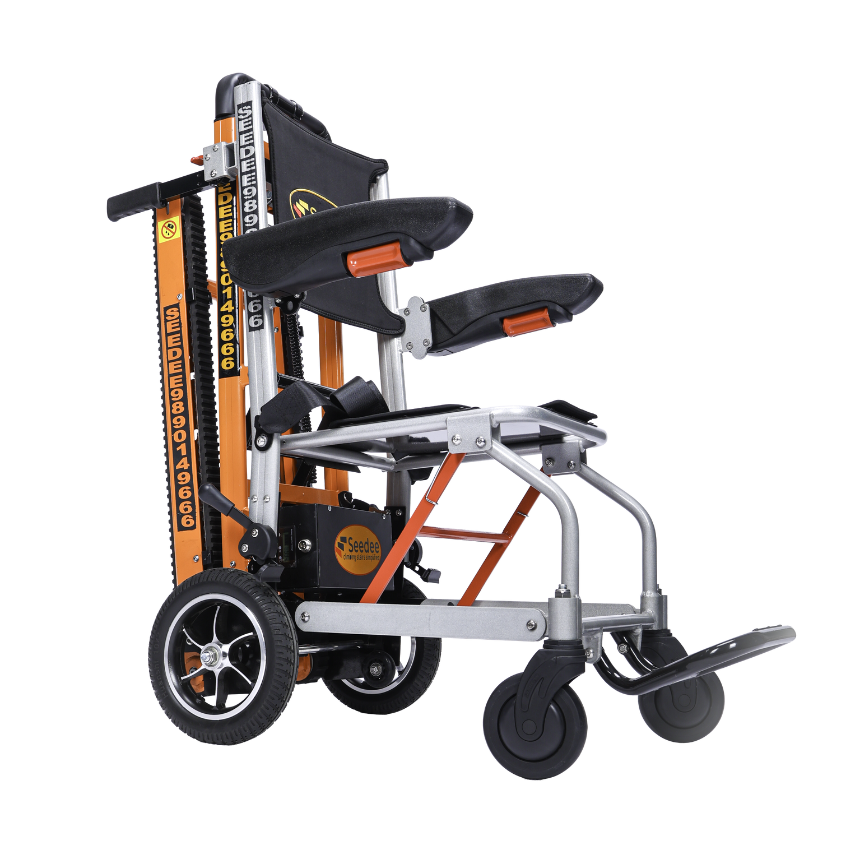
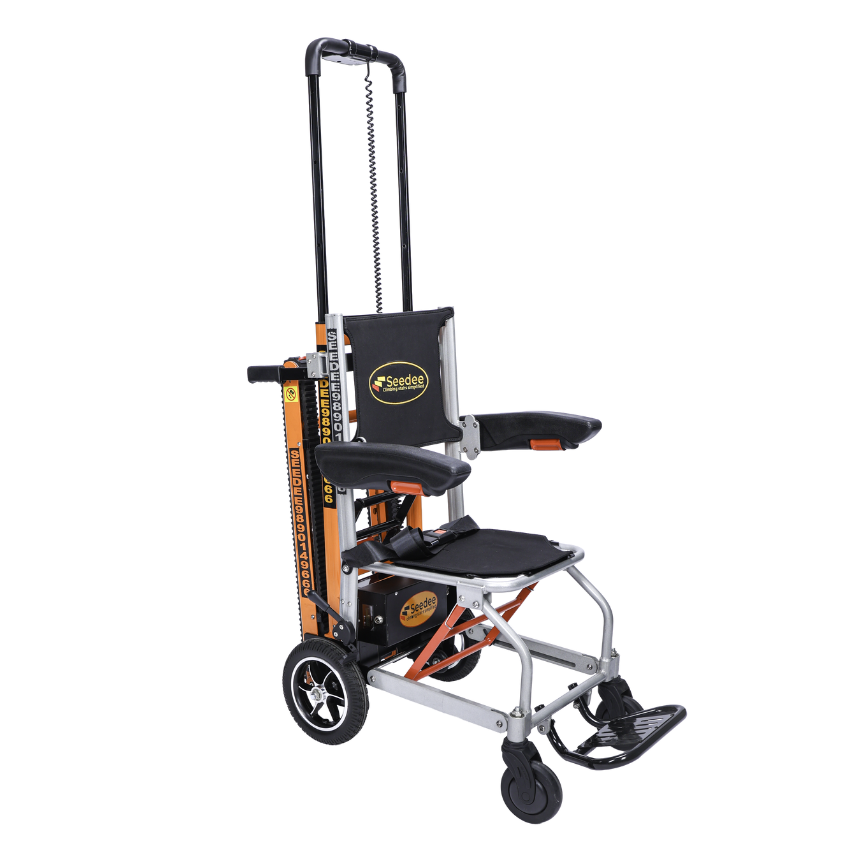
A stair-climbing wheelchair is made specifically for this purpose. It uses tracks or another stair-climbing system to help an attendant take a person up or down the stairs.
These wheelchairs can be useful in:
- Multi-storey homes without lifts
- Older residential buildings
- Hospitals and care centres
- Offices and public buildings
- Places where fitting a lift or permanent stairlift is not possible
Seedee is an established Indian brand that has worked closely with wheelchair users and their families over the years. This experience matters because Indian homes come with their own practical difficulties: narrow staircases, small landings, sharp turns, uneven entrances and buildings where installing a lift is simply not possible.
Instead of assuming that one wheelchair will work everywhere, Seedee assesses the staircase and recommends a model based on the home and the person’s needs.
The Seedee Regular stair-climbing wheelchair is battery-operated while going up or down stairs and is pushed manually on flat ground.
The Seedee Attach stair-climbing wheelchair can be used for regular movement as well as on stairs with its separate stair-climbing attachment. This can be useful for families who do not want to keep different wheelchairs for different parts of the day.
Seedee stair-climbing wheelchairs generally require an attendant while being used on stairs. The stairs should also be checked before choosing a model, as their width, slope, landings and turns can affect whether the wheelchair can be used safely.
What should you check before choosing a wheelchair?
Knowing the different types of wheelchairs is helpful, but the final choice should be based on the person’s actual routine.
Here are a few questions worth asking.
Where will the wheelchair be used?
Think about the places the person visits regularly. A wheelchair used mainly inside the home may have different requirements from one used on roads, in parks or during travel.
Measure doors, lifts, passages and other narrow areas. If there are stairs, check how often they need to be used and whether a family member or attendant will be available.
How long will the person sit in it?
Someone who uses a wheelchair for short outings may not need the same level of seat and back support as someone who sits in it for several hours every day.
Seat width, cushioning, footrests, armrests and back support all affect comfort. A wheelchair should not feel cramped, but a seat that is too wide may also make sitting and moving more difficult.
Will someone be available to help?
Some wheelchairs can be moved by the person using them, while others need to be pushed or operated by an attendant.
It is important to be realistic about how much help will usually be available at home and outdoors. The family member or attendant should also be comfortable handling the wheelchair.
Does it need to be carried or stored?
If the wheelchair will regularly travel in a car, check how easily it folds and how much it weighs. Also make sure that the person lifting it can do so comfortably.
At home, consider where the wheelchair will be kept and whether there is enough space to turn and move it.
Can you try it before deciding?
Whenever possible, arrange a demonstration. Sitting in the wheelchair and trying it in the actual space where it will be used can reveal things that are easy to miss in a brochure.
For a stair-climbing wheelchair, the demo should ideally happen on the stairs where it will be used. This also gives the attendant a chance to understand how the wheelchair works.
The right wheelchair should fit the person’s day
Choosing a wheelchair is not only about comparing features. It is about noticing the small details of a person’s day: where they move, how long they sit, whether they travel often, what kind of help is available and whether stairs are part of the home.
Take time to compare the options, ask questions and arrange a demonstration when possible. A wheelchair that suits the person and their surroundings will usually be more comfortable and easier for everyone to use.
If stairs are the main concern, Seedee can assess the staircase, explain the available models and arrange a wheelchair demo before the family makes a decision.