
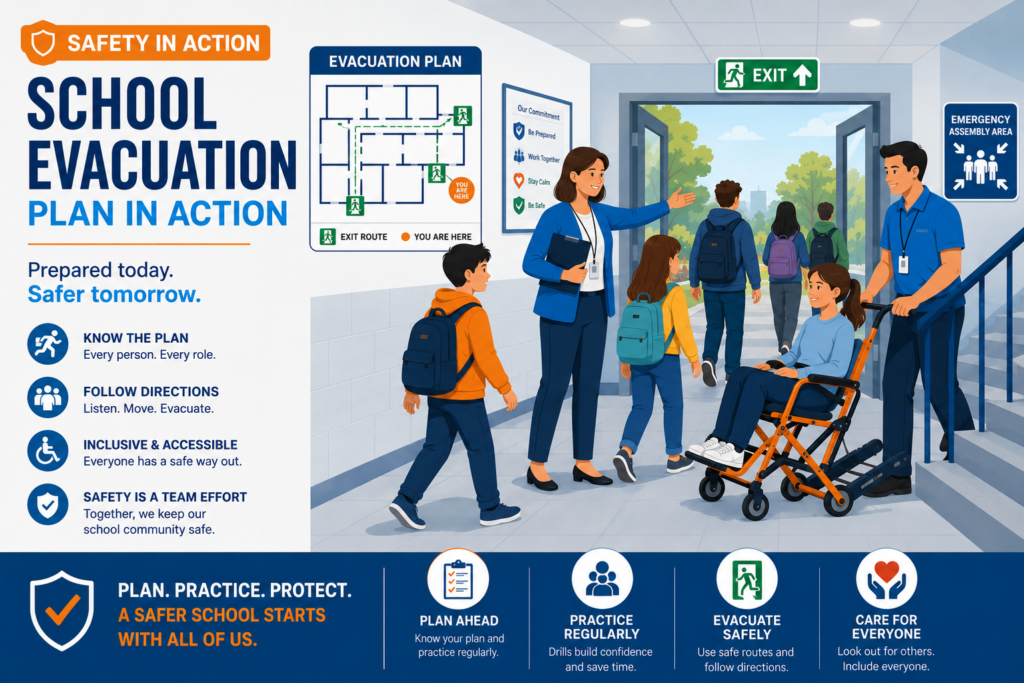
The safety of students, teachers, staff, and visitors is one of the most important responsibilities of every educational institution. Whether facing a fire, earthquake, gas leak, structural emergency, or other crisis, schools must be prepared to evacuate occupants quickly and safely.
A well-planned evacuation strategy can significantly reduce risks, prevent injuries, and save lives. However, effective school evacuation goes beyond simply sounding an alarm. It requires detailed planning, staff training, regular drills, and accessible evacuation solutions for individuals with mobility challenges.
This comprehensive guide explores everything schools need to know about evacuation planning, emergency preparedness, and creating a safer environment for everyone on campus.
What is evacuation in schools?
School evacuation is the organised process of moving students, teachers, administrative staff, and visitors from a potentially dangerous area to a designated safe location during an emergency.
The primary goals of a school evacuation are:
- Protect lives and prevent injuries
- Ensure a calm and orderly response
- Minimise confusion and panic
- Maintain accountability for all occupants
- Support emergency responders
- Provide safe evacuation for individuals with disabilities or mobility limitations
An effective evacuation plan ensures that every person in the school knows exactly what to do when an emergency occurs.
Why is school evacuation planning important?
Schools accommodate large numbers of people every day. In an emergency, even a few minutes of confusion can increase risks significantly.
A comprehensive evacuation plan helps schools:
- Improve emergency response times
- Reduce the likelihood of injuries
- Ensure student accountability
- Strengthen overall campus safety
- Meet safety and accessibility requirements
- Increase confidence among parents, staff, and students
Preparedness is not just about compliance—it is about protecting lives.
Common emergencies that require school evacuation
1. Fire emergencies
Fire is one of the most common reasons schools must evacuate. Smoke and flames can spread rapidly, making immediate evacuation critical.
2. Earthquakes
Schools located in seismic regions need evacuation procedures that account for structural damage and potential aftershocks.
3. Gas leaks and chemical hazards
Science laboratories, maintenance areas, and nearby industrial facilities can create situations that require immediate evacuation.
4. Severe weather events
Floods, cyclones, storms, and other weather-related emergencies may necessitate moving students to safer locations.
5. Security threats
Bomb threats, suspicious packages, and other security incidents may require partial or complete evacuation of school premises.
Key components of an effective school evacuation plan
Risk assessment
Every school should begin by identifying potential hazards specific to its location and infrastructure.
Examples include:
- Fire hazards
- Electrical risks
- Earthquake exposure
- Flood-prone zones
- Laboratory risks
- Structural vulnerabilities
Understanding these risks helps schools develop targeted evacuation procedures.
Clearly marked exit routes
Emergency exits should be easy to locate and accessible at all times.
Best practices include:
- Illuminated exit signs
- Posted evacuation maps
- Multiple exit pathways
- Regular inspections to remove obstructions
Designated assembly areas
Schools should establish safe assembly points where students and staff can gather after evacuation.
Assembly areas should:
- Be located away from buildings
- Accommodate all occupants
- Allow quick attendance verification
- Provide access for emergency personnel
Emergency Communication Systems
Clear communication is essential during emergencies.
Schools should use:
- Fire alarms
- Public announcement systems
- Emergency notification systems
- Mobile communication tools
- Two-way radios for staff coordination
Defined roles and responsibilities
Every staff member should understand their responsibilities during an evacuation.
Teachers should:
- Lead students to safety
- Conduct attendance checks
- Report missing students
Administrators should:
- Coordinate emergency procedures
- Communicate with emergency services
- Manage communication with parents and guardians
Step-by-step school evacuation procedure
Step 1: Activate the emergency alarm
Once an emergency is detected, the appropriate alarm system should be activated immediately.
Step 2: Follow designated exit routes
Students and staff should evacuate using the nearest safe exit.
Important guidelines include:
- Remain calm
- Walk quickly without running
- Follow staff instructions
- Leave personal belongings behind
Step 3: Move to assembly areas
All occupants should proceed directly to the designated safe assembly point.
Step 4: Verify attendance
Teachers should conduct attendance checks immediately upon reaching the assembly area.
Step 5: Await further instructions
Students and staff should remain at the assembly point until emergency responders or school authorities provide further directions.
Evacuating students with disabilities and mobility challenges
One of the most important aspects of emergency planning is ensuring safe evacuation for everyone, including individuals with mobility limitations.
Students, teachers, and visitors may have:
- Physical disabilities
- Temporary injuries
- Medical conditions
- Mobility restrictions
Traditional evacuation procedures may not adequately address these needs, especially in multi-story school buildings.
Accessibility challenges during school evacuations
Many schools face evacuation challenges such as:
- Staircase access during emergencies
- Elevator shutdowns
- Limited evacuation equipment
- Insufficient staff training for assisted evacuation
Without proper planning, these challenges can delay evacuation efforts and increase risks.
Why evacuation chairs are important in schools
For schools with multi-floor buildings, evacuation chairs play a vital role in emergency preparedness.
Evacuation chairs are specifically designed to help move individuals safely down staircases when elevators cannot be used.
Key benefits include:
- Faster emergency evacuation
- Improved safety on stairways
- Reduced physical strain on caregivers and staff
- Better preparedness for emergencies
- Enhanced accessibility and inclusivity
At Seedee Wheelchair, we offer evacuation chair solutions that can support schools, colleges, universities, offices, residential societies, and institutions in strengthening their emergency evacuation planning.
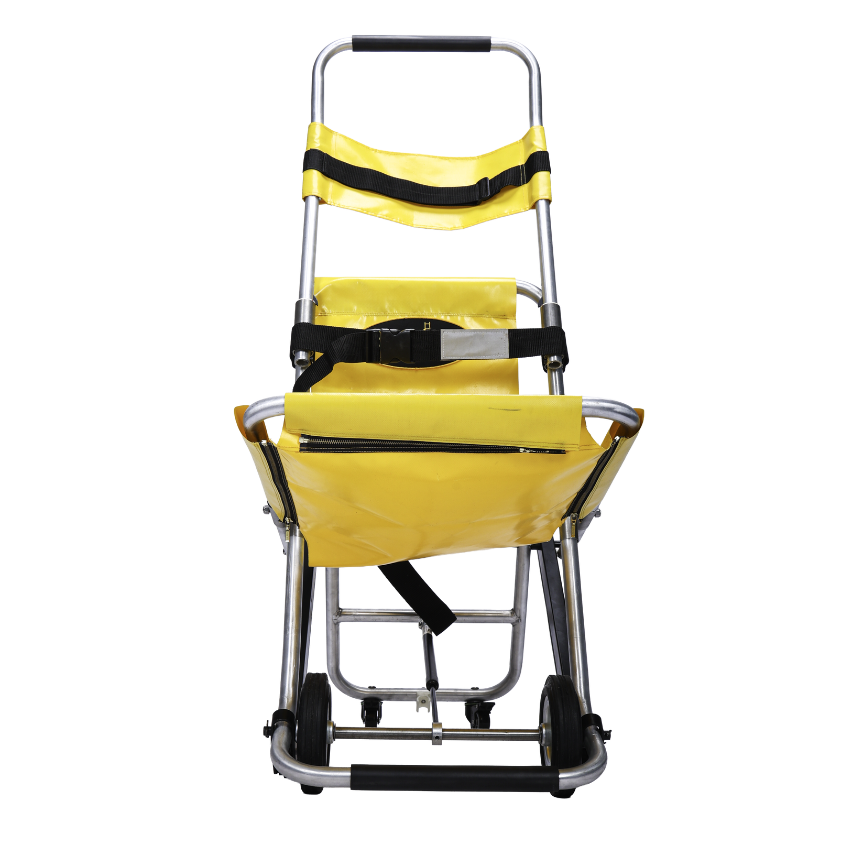
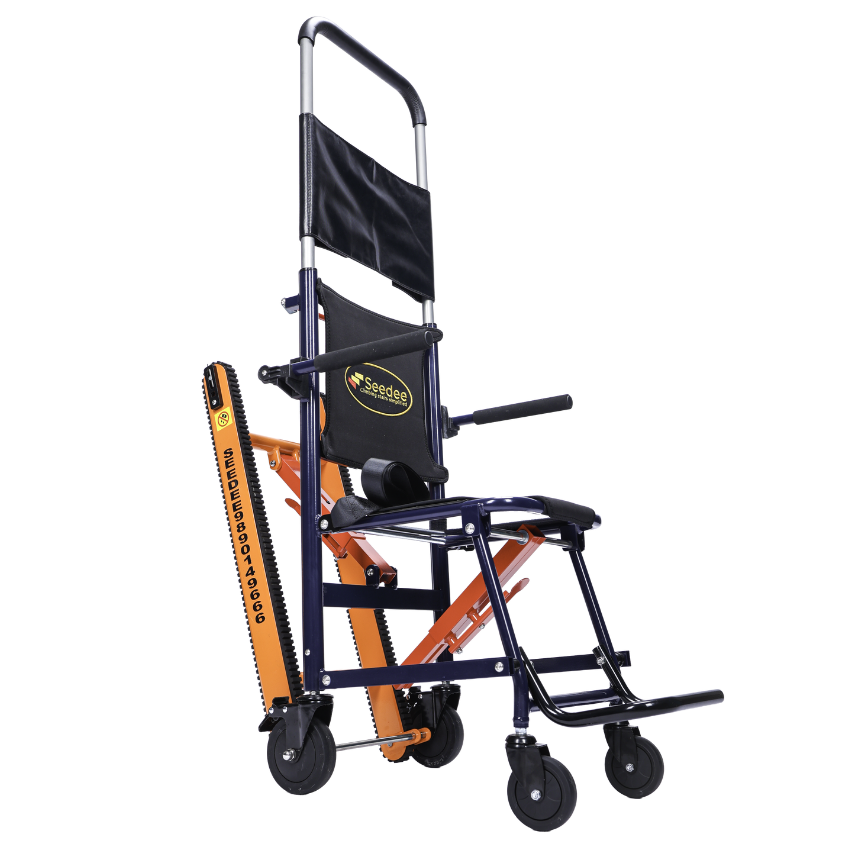
Seedee’s evacuation chairs are designed to support safer assisted evacuation in schools, colleges, institutions, offices, residential buildings, and other multi-storey facilities where stair evacuation may be required during emergencies.
The importance of regular school evacuation drills
Even the best evacuation plan is ineffective if people do not know how to execute it.
Regular evacuation drills help:
- Familiarise students with procedures
- Improve response times
- Reduce panic during actual emergencies
- Identify weaknesses in evacuation plans
- Build confidence among staff and students
Schools should conduct evacuation drills regularly and review procedures annually.
Common school evacuation mistakes to avoid
Poor communication
Unclear instructions can create confusion and delay evacuation efforts.
Blocked emergency exits
Exit routes should remain unobstructed at all times.
Lack of training
Teachers and staff should receive ongoing emergency response training.
Ignoring accessibility requirements
Emergency plans must include provisions for individuals requiring evacuation assistance.
Inadequate emergency equipment
Schools should assess whether specialized evacuation equipment is necessary based on building layout and occupancy needs.
School evacuation safety checklist
- Before an emergency occurs, schools should ensure:
- Emergency exits are clearly marked
- Evacuation maps are displayed throughout the campus
- Assembly areas are designated
- Emergency contact information is current
- Staff responsibilities are assigned
- Evacuation drills are conducted regularly
- Accessibility needs are addressed
- Emergency equipment is inspected and maintained
- Students understand evacuation procedures
- Communication systems are functioning properly
Final thought
School evacuation planning is a critical component of campus safety. Emergencies can occur without warning, making preparedness essential for protecting students, staff, and visitors.
A successful evacuation strategy includes clear procedures, trained personnel, regular drills, effective communication systems, and accessible evacuation solutions. By addressing the needs of all occupants—including those with mobility challenges—schools can create a safer and more inclusive learning environment.
As educational institutions continue to strengthen their safety measures, investing in reliable evacuation equipment and emergency preparedness solutions can make a significant difference when every second counts.
Seedee Wheelchair is committed to supporting schools and educational institutions with practical evacuation solutions that help improve safety, accessibility, and emergency readiness for everyone.
Frequently Asked Questions
What is evacuation in schools?
School evacuation is the organised process of moving students, staff, and visitors to a safe location during emergencies such as fires, earthquakes, or security threats.
Why is school evacuation planning important?
Effective evacuation planning helps protect lives, reduce panic, improve emergency response, and ensure accountability during emergencies.
How often should schools conduct evacuation drills?
Schools should conduct regular evacuation drills throughout the academic year and review emergency procedures annually.
What challenges do schools face during evacuations?
Common challenges include communication issues, blocked exits, crowd management, and evacuating individuals with mobility limitations.
Why should schools consider evacuation chairs?
Evacuation chairs help safely transport individuals with mobility challenges down staircases when elevators cannot be used during emergencies.
How can Seedee Wheelchair help educational institutions?
Seedee Wheelchair provides evacuation chair solutions designed to improve emergency preparedness and accessibility in schools, colleges, universities, and other educational facilities.